EAT
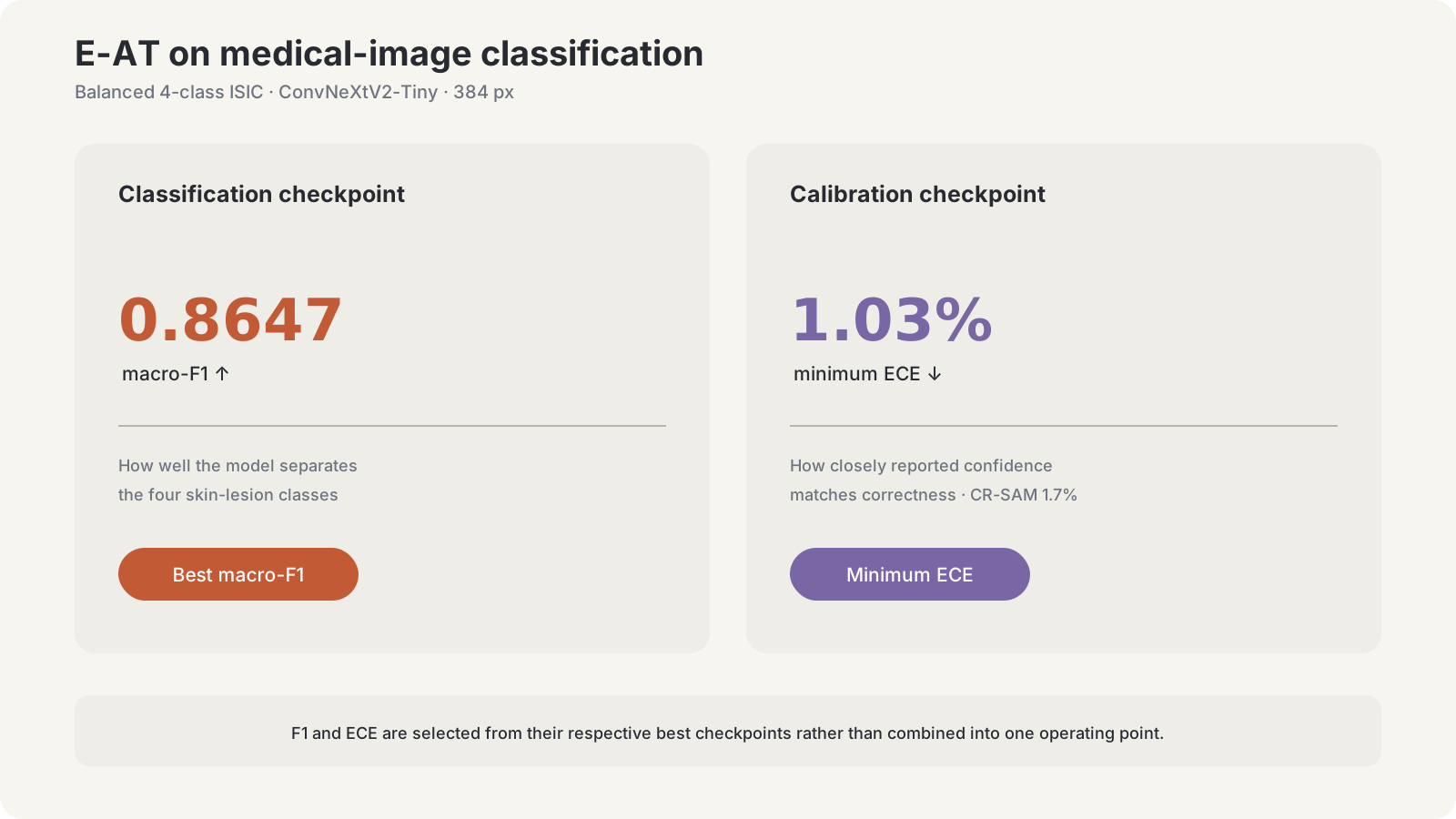
E-AT for calibrated medical-image classification · macro-F1 0.8647 · ECE 1.03% vs. CR-SAM 1.7%
Built with PyTorch · ConvNeXtV2-Tiny · Focal loss · R-Drop · FGM · ISIC 2019
WHY
In medical image classification, a correct label is not enough if the confidence cannot be trusted. Two models with similar accuracy can create very different risk when one remains overconfident on its mistakes. The research therefore asked whether classification quality and confidence calibration could be improved within the same training objective.
Balanced · ConvNeXtV2-Tiny · 384 px
Best classification result
CR-SAM (AAAI 2024): 1.7%
HOW
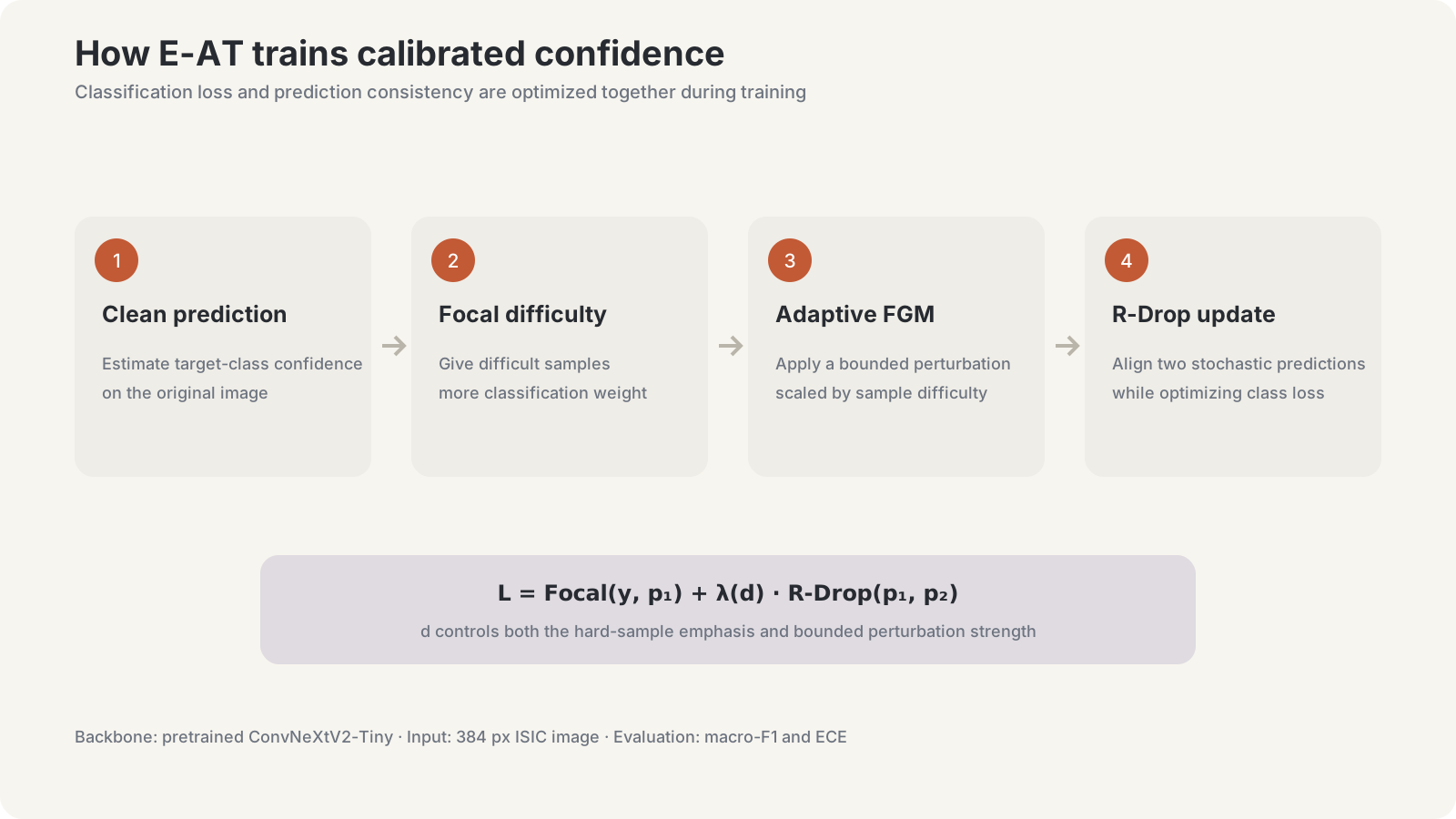
One objective for classification and calibrated confidence
E-AT couples sample difficulty, perturbation, and prediction consistency instead of calibrating only after training.
- 01 Image and class label
Run a clean stochastic forward pass and measure target-class confidence on each ISIC image.
- 02 Focal difficulty
Give difficult samples more weight through focal loss rather than treating every example equally.
- 03 Adaptive FGM
Scale a bounded perturbation with sample difficulty and evaluate a second stochastic prediction.
- 04 R-Drop update
Optimize classification and bidirectional prediction consistency together in one update.
RESULT
ISIC result
| Metric | E-AT result | Selection |
|---|---|---|
| Macro-F1 ↑ | 0.8647 | Classification checkpoint |
| ECE ↓ | 1.03% | Calibration checkpoint |
| CR-SAM ECE ↓ | 1.7% | AAAI 2024 reference |
Macro-F1 and ECE report their respective best checkpoints.
Contribution
- Designed the E-AT objective that couples focal difficulty, adaptive FGM, and bidirectional R-Drop.
- Built the balanced ISIC training and evaluation pipeline and tracked macro-F1 and ECE separately.
Evidence
Private project